



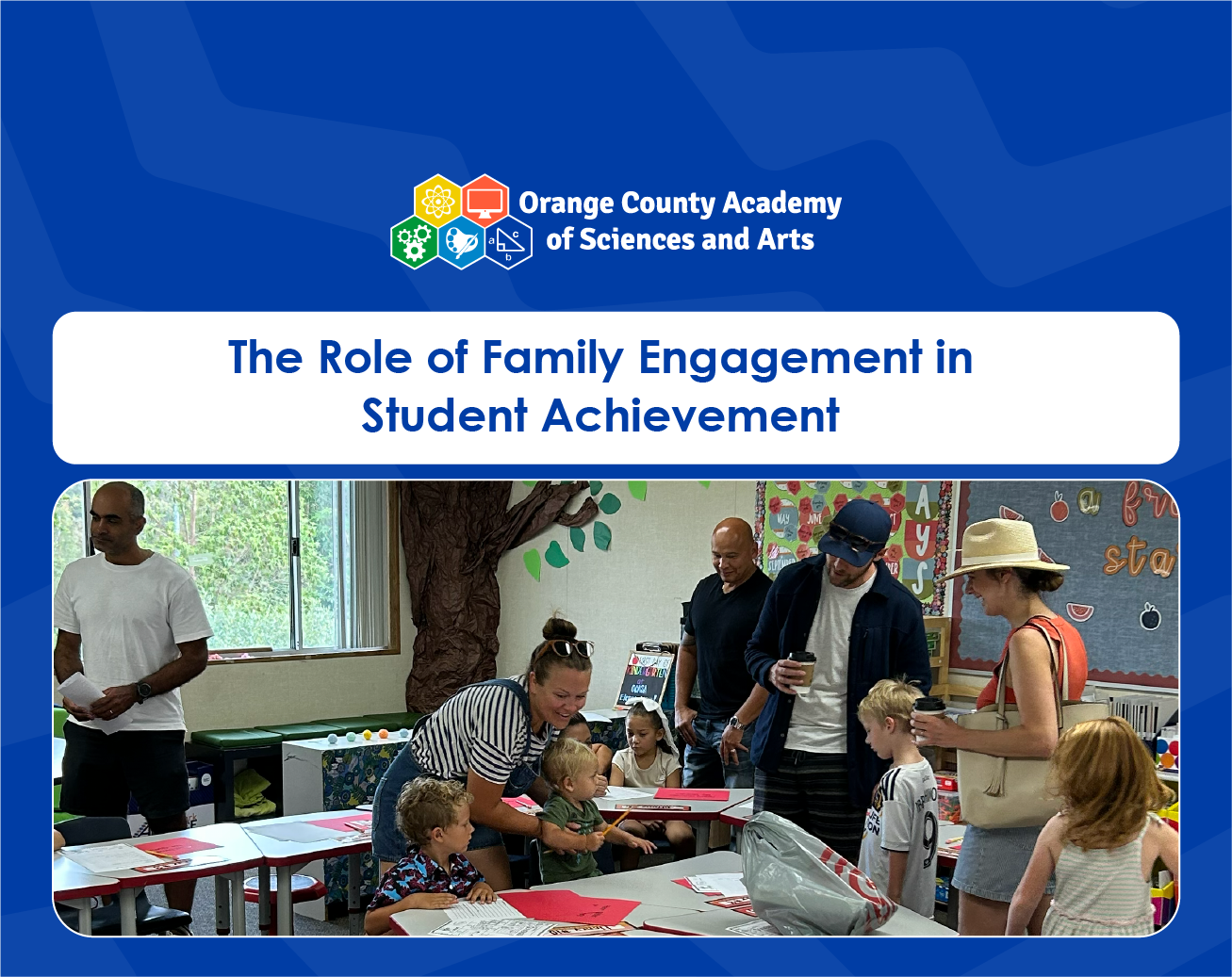
The Role of Family Engagement in Student Achievement
“When families and schools work together, students grow stronger, more confident, and more successful.”
Learning does not only happen in classrooms. It happens in the small moments at home too: in the questions parents ask, in the encouragement children hear, and in the way families show interest in what their child is learning. Those everyday moments shape how students feel about school and how confident they are in themselves.
That is why family engagement matters so much in a child’s learning. When families are involved, children feel supported in every way. They know their school cares, and they know their family is part of their journey too. This connection between home and school is one of the most powerful tools for helping students grow, both academically and personally. In this blog, let’s discover the importance of family engagement in education and how OCASA fosters it throughout its community.
Role of Family Engagement in Education
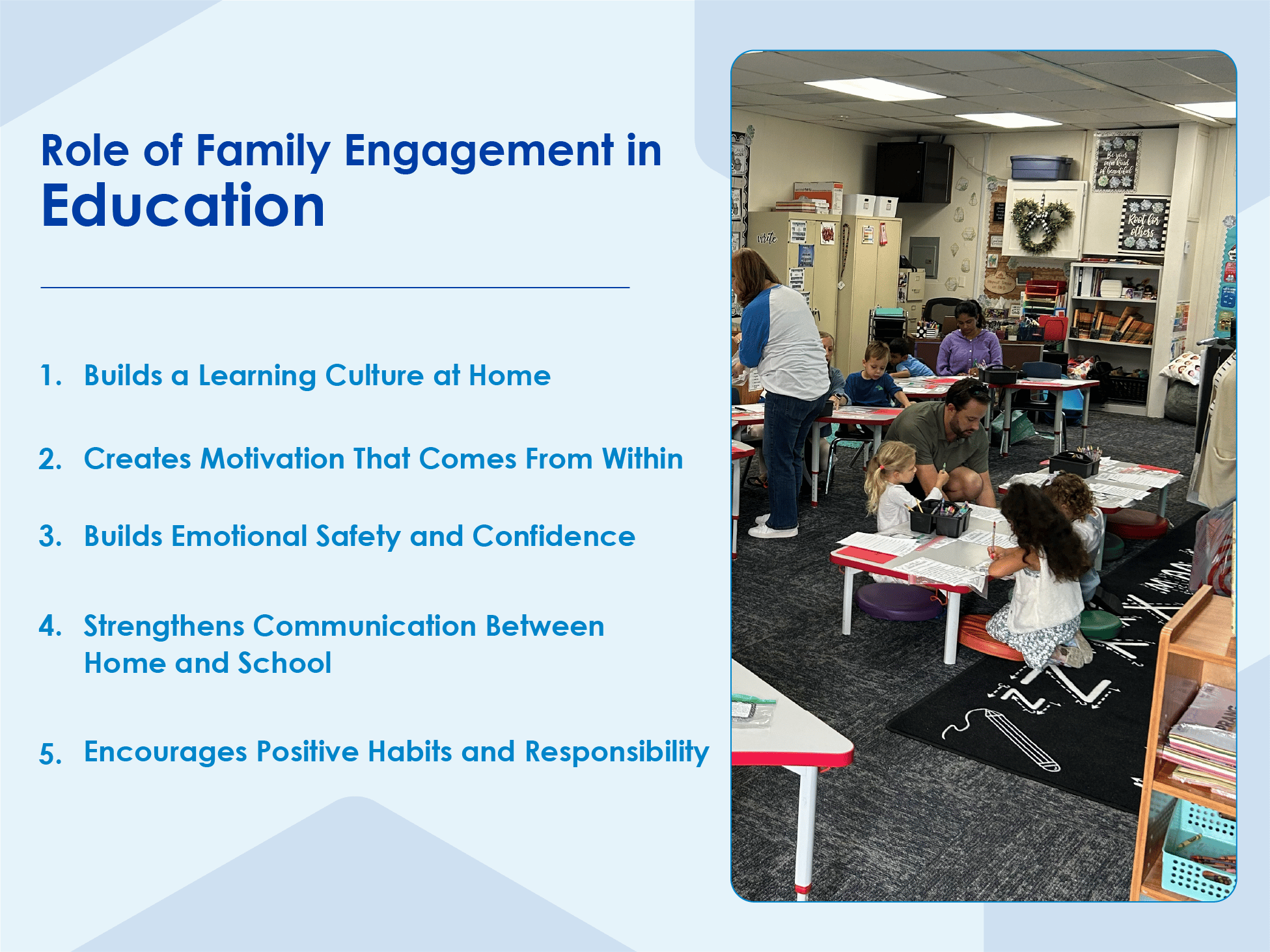
When families stay involved, learning feels important both at home and at school. This shared support builds motivation, confidence, and focus in students. These are the ways family involvement supports student growth and success:
1. Builds a Learning Culture at Home
When families talk about school at home, learning feels important to children. Simple things like asking about their day, helping with studies, or reading together build a culture where learning matters.
When students see that their family cares about their learning, they care more too. That is how family engagement impacts grades, not through pressure, but through encouragement and consistency.
2. Creates Motivation That Comes From Within
Children try harder when they know someone believes in them. When parents show interest in school activities and celebrate effort, students feel proud of what they do. That pride builds motivation.
Family engagement in school helps students understand that learning is not just something they do for teachers; it is something they do for themselves and their future. This way, the role of family engagement in education helps children see purpose in their work.
3. Builds Emotional Safety and Confidence
When families are involved in a student’s learning journey, they feel safe. They know they are supported both at home and at school. That emotional safety helps students speak up, ask questions, and try again when something feels complex.
That is why family engagement in student achievement is deeply connected to confidence. Confident students are not afraid to learn, and they are not afraid to grow.
4. Strengthens Communication Between Home and School
When families and teachers communicate often, students get clear and consistent messages. They understand expectations, routines, and goals. That clarity helps children stay focused and organized.
Family engagement in school works best when communication is open and clear. When the bridge between home and school is strong, the student never has to navigate their educational journey alone.
5. Encourages Positive Habits and Responsibility
Students whose families stay involved tend to build better habits. They show up prepared, complete their work, and take responsibility for their learning.
This is where family engagement and student success come together in a powerful way. Children learn that their actions matter and that their growth is supported by the people around them.
How OCASA Supports Family Engagement in School
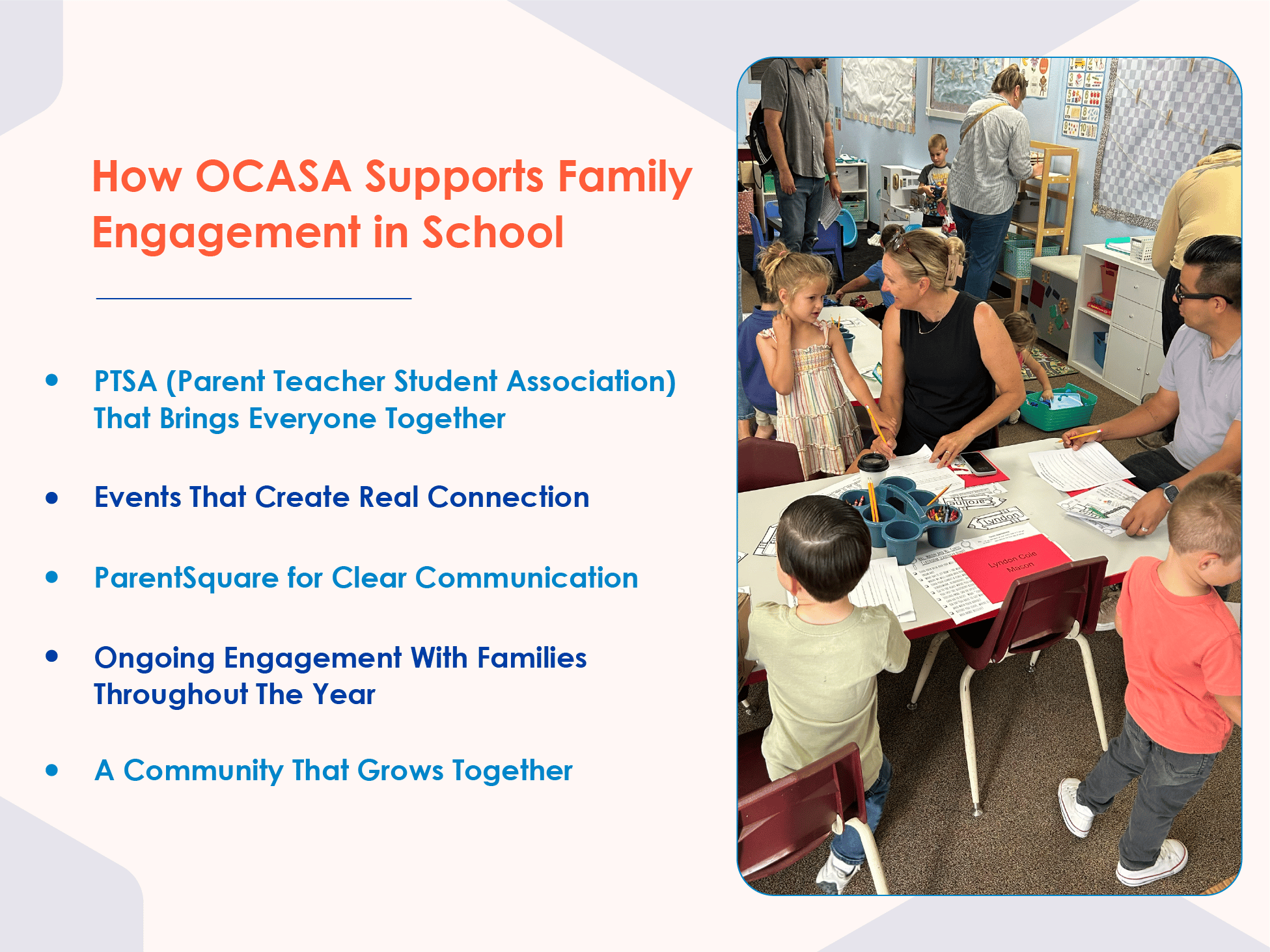
At OCASA, family engagement is part of everyday school life. We believe learning grows stronger when families feel welcome, informed, and involved. We work closely with parents to support every child’s journey with these programs and shared experiences:
-
PTSA (Parent Teacher Student Association) That Brings Everyone Together
At OCASA, the PTSA is more than a group; it is a community. Parents, teachers, and students work together to support events, share ideas, and build strong relationships.
This kind of family engagement in school makes families feel welcome and involved, not just informed.
-
Events That Create Real Connection
OCASA hosts many PTSA events like park playdates, book fairs, and movie nights. These moments allow families to relax, talk, and connect with one another in a natural way.
These shared experiences support family engagement in student achievement because children see their school as a place where their family belongs too.
-
ParentSquare for Clear Communication
OCASA uses the ParentSquare portal to keep families connected. Parents receive updates, messages, and reminders about what is happening in schools and campuses.
This supports family engagement by making communication simple, direct, and consistent.
-
Ongoing Engagement With Families Throughout The Year
At OCASA, family involvement is not just for special events. Teachers and staff stay in touch with families throughout the year, sharing progress, celebrating growth, and offering support.
This continuous connection strengthens family engagement and student success through trust and care.
-
A Community That Grows Together
At OCASA, learning is a shared journey. Here, teachers, families, and students grow together by supporting one another and celebrating each step forward.
This shared effort strengthens family engagement in student achievement and creates a strong foundation for lifelong learning.
Conclusion
Family engagement is one of the most important parts of a child’s learning journey. When families stay connected to what children are learning, those small everyday moments begin to make a big difference. A simple conversation, a shared activity, or a word of encouragement can help a child feel more confident and more motivated.
At OCASA, we believe that learning feels stronger when it is shared. When families are involved, students feel more connected, more supported, and more ready to grow. Over time, this support helps children build not only academic skills but also the confidence and mindset they need to succeed in school and beyond.
.webp?height=245&name=mothers%20day-18%20(1).webp)

%20_653%20X%20518%20_%202%20copy%206.webp?height=245&name=Blog%20images(Empowering%20Young%20Innovators)%20_653%20X%20518%20_%202%20copy%206.webp)

.webp?height=245&name=Hands-on%20Learning%20to%20Revolutionize%20Core%20Education-09-09%20(1).webp)
-1.png?height=245&name=image%20(14)-1.png)

.webp?height=245&name=celebrating-the-incredible-staff-at-ocasa-01%20(1).webp)




-11.webp?height=245&name=Blog(%20The%20Magic%20of%20Reading)-11.webp)
.webp?height=245&name=Main%20Banner@2x%20(1).webp)
.webp?height=245&name=Library1.1%20(1).webp)


.webp?height=245&name=What%20Does%20Student-Centered%20Learning@2x%20(1).webp)

.webp?height=245&name=smart%20learning-16%20(2).webp)